
/rating_on.png "35 votes, average: 5.00 out of 5")
 Loading...
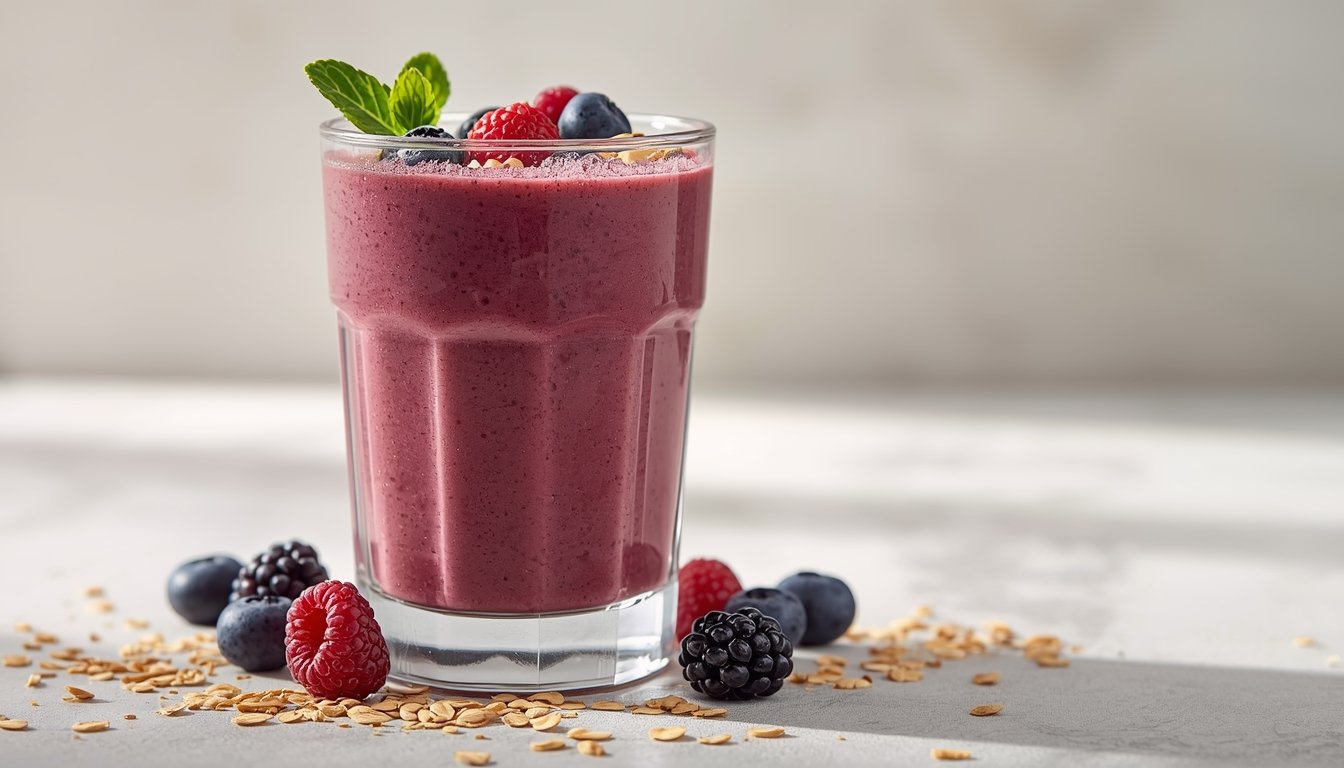
A protein smoothie is an effective way to support workouts, recovery, and daily nutrition without adding unnecessary complexity to your routine. This recipe focuses on whole, familiar ingredients that work together to deliver protein, carbohydrates, and micronutrients in a balanced and easy-to-digest form.
Because this protein smoothie combines Greek yogurt, berries, and oats, it supports muscle maintenance while also helping sustain energy levels. As a result, it fits well into post-workout nutrition, busy mornings, or afternoons when a light but filling option is needed.
Unlike many commercial smoothies, this protein smoothie avoids artificial sweeteners and excessive sugar. Instead, it relies on naturally occurring nutrients and fiber, which can help improve satiety and support stable energy throughout the day.
Why This Protein Smoothie Works for Fitness & Safety 💪⚠️
This protein smoothie supports fitness goals by providing high-quality protein from Greek yogurt, which contributes to muscle repair and maintenance after training. At the same time, oats supply complex carbohydrates that help replenish energy used during workouts.
Berries add antioxidants and natural flavor, while also keeping the smoothie light and refreshing. In addition, the balanced macronutrient profile makes this recipe suitable for both strength training days and active recovery days.
However, people with dairy intolerance should replace Greek yogurt with a lactose-free or plant-based high-protein alternative. Always adjust ingredients based on individual needs and sensitivities.
For additional guidance on fueling workouts and recovery, explore Fitness Nutrition and Recovery Tips.
Research from the Harvard T.H. Chan School of Public Health highlights the importance of consistent protein intake to support muscle health, metabolic function, and overall wellness.
Leave a Reply